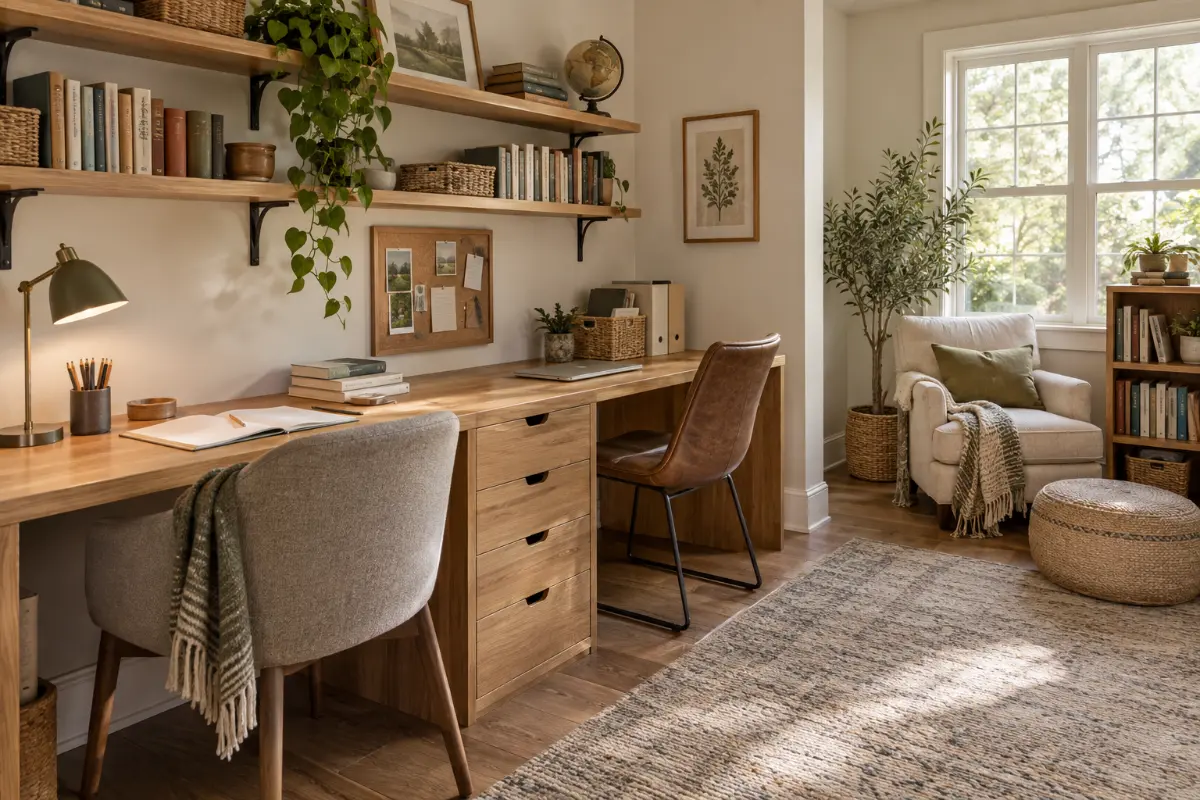
15 Cozy Homeschool Room Ideas for Homework, Reading, and Creative Study
A cozy homeschool room does not need to look like a classroom—or even take up an entire room. A well-planned desk, good lighting, easy-to-reach storage, and a comfortable place to read can turn an unused corner into a study space that works for everyday homework as well as at-home learning.
These homeschool room ideas include shared study walls, small bedroom desks, creative workstations, reading corners, and family-room homework nooks. The goal is to create a space that feels calm and organized while still fitting naturally into the rest of your home.
What Makes a Good Homeschool or Homework Space?
A good homeschool or homework space should give a child a clear place to work, enough light to read comfortably, easy access to everyday supplies, and a layout that matches how they actually study. It does not need to be a separate room—an organized corner, shared desk, or family-room nook can work just as well.
- A defined work surface for writing, reading, and everyday schoolwork.
- Good lighting from a window, task lamp, or a combination of both.
- Easy-to-reach storage for books, paper, pencils, and frequently used supplies.
- A layout that fits how the child actually studies, whether that means a quiet corner, a shared desk, or a spot near the family.
15 Cozy Homeschool Room Ideas for Everyday Learning
1. Create a Dedicated Homeschool Wall
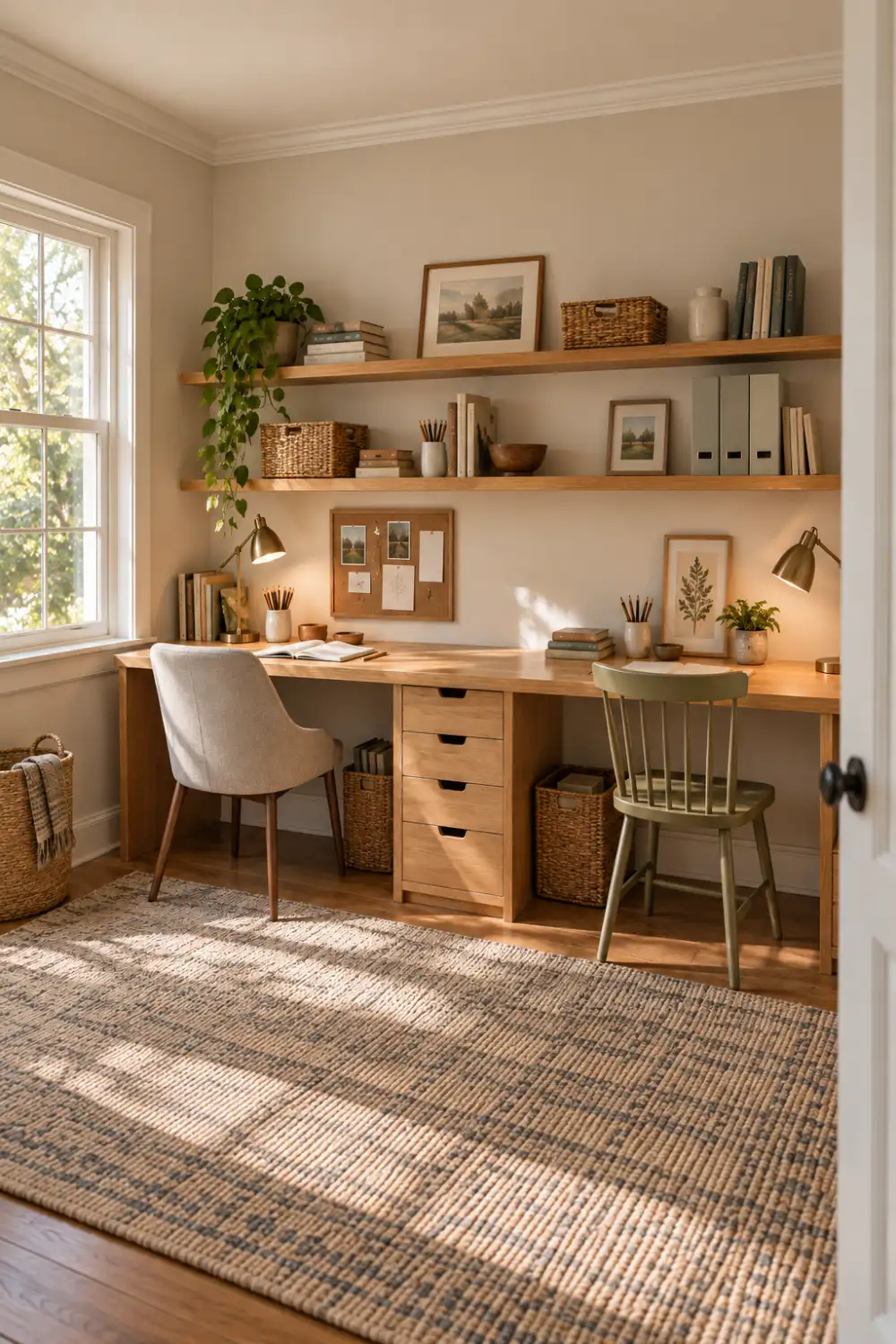
A full homeschool room is not always necessary. A single wall can work surprisingly well when the desk, storage, lighting, and everyday supplies are grouped together in one clearly defined area.
Start with a desk that gives the child enough room to write, read, and use a laptop if needed. Add a small shelf, drawer unit, or wall organizer above or beside it so books and supplies stay close without covering the work surface.
Keeping the setup visually simple helps the area feel calm rather than classroom-like. A few useful items, warm wood, soft neutral colors, and one or two personal details are usually enough to make the space feel inviting.
2. Turn an Empty Corner Into a Homework Nook
An unused corner can become a practical homework nook with very little furniture. A compact desk, one comfortable chair, and a small amount of wall storage are often all that is needed to create a space that feels separate from the rest of the room.
Choose a desk that fits the corner without making the area feel crowded, then use vertical space for books, folders, or a small organizer. A narrow shelf or wall-mounted storage can keep the desktop clear while still keeping school supplies within reach.
This approach works especially well in bedrooms, family rooms, and small apartments because it creates a defined study zone without taking over the whole space.
3. Place the Desk Near Natural Light
A desk near a window can make a homework space feel brighter and more comfortable during the day. Natural light also helps a small study corner feel more open, which can be especially useful in bedrooms or compact rooms.
Position the desk close enough to benefit from daylight, but avoid placing the screen or work surface where strong glare becomes distracting. A simple task lamp is still useful for cloudy afternoons, early mornings, or evening homework.
Keep the area around the window relatively uncluttered so light can move through the room. Light curtains, a small plant, and a few practical desk items are enough to make the space feel finished without blocking the window.
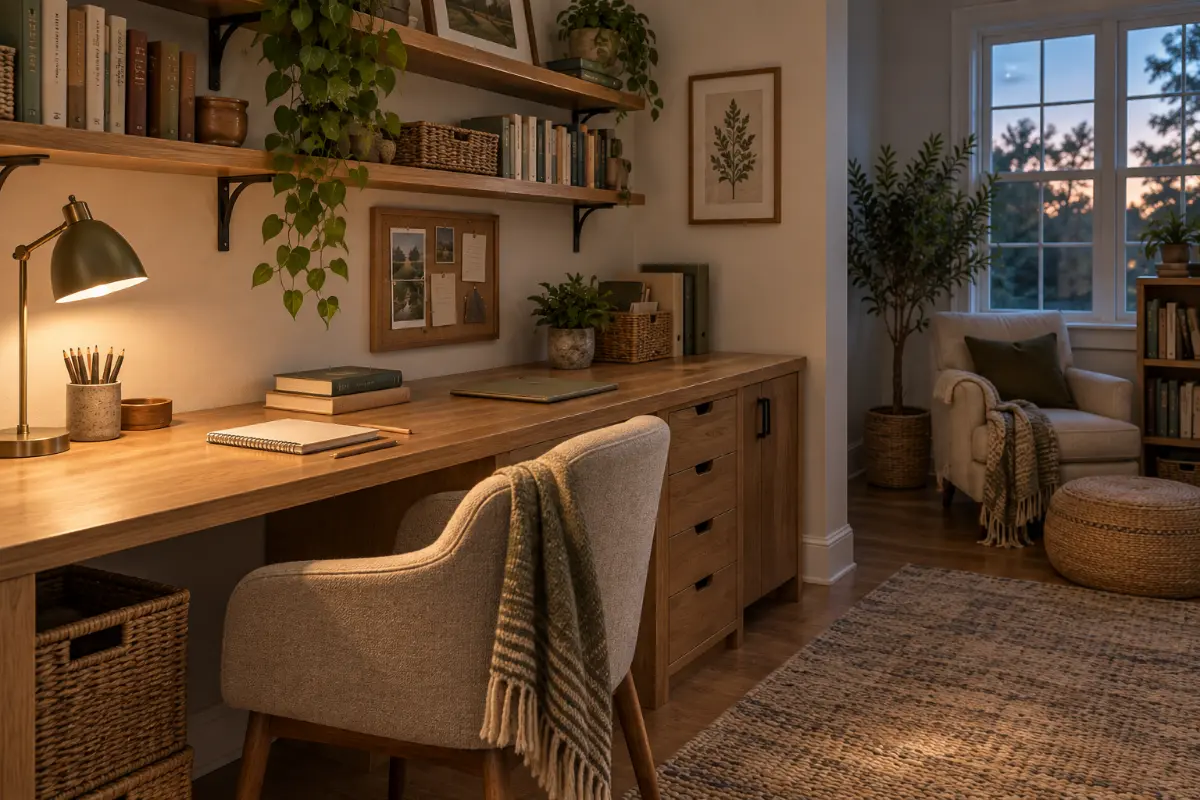
4. Build a Shared Homework Station for Two
A shared homework station can work well for siblings when each child has enough personal space to focus. A long desk or two connected desks can create one cohesive study area without making the room feel crowded.
Give each child a clear work zone with their own chair, nearby storage, and easy access to everyday supplies. The two sides do not need to look identical, but keeping the overall materials and colors consistent helps the setup feel calm and intentional.
A shared station works best when the middle of the desk stays relatively open and clutter is moved upward or into drawers. This leaves enough room for notebooks, reading, and larger homework projects without the two work areas competing for space.
5. Use Vertical Storage Above the Desk
When floor space is limited, the wall above the desk can hold much of the storage a homework area needs. Floating shelves, a small pegboard, wall pockets, or vertical file holders can keep supplies organized without using valuable desktop space.
Store frequently used items lower down where they are easy to reach, while books and less-used supplies can sit on higher shelves. Mixing open storage with a few closed drawers or baskets helps the space stay practical without looking visually busy.
The goal is not to fill the wall from floor to ceiling. Leaving some open space between shelves and organizers keeps the area lighter and makes it easier for the child to focus on the work surface.
6. Add Closed Storage to Calm the Visual Clutter
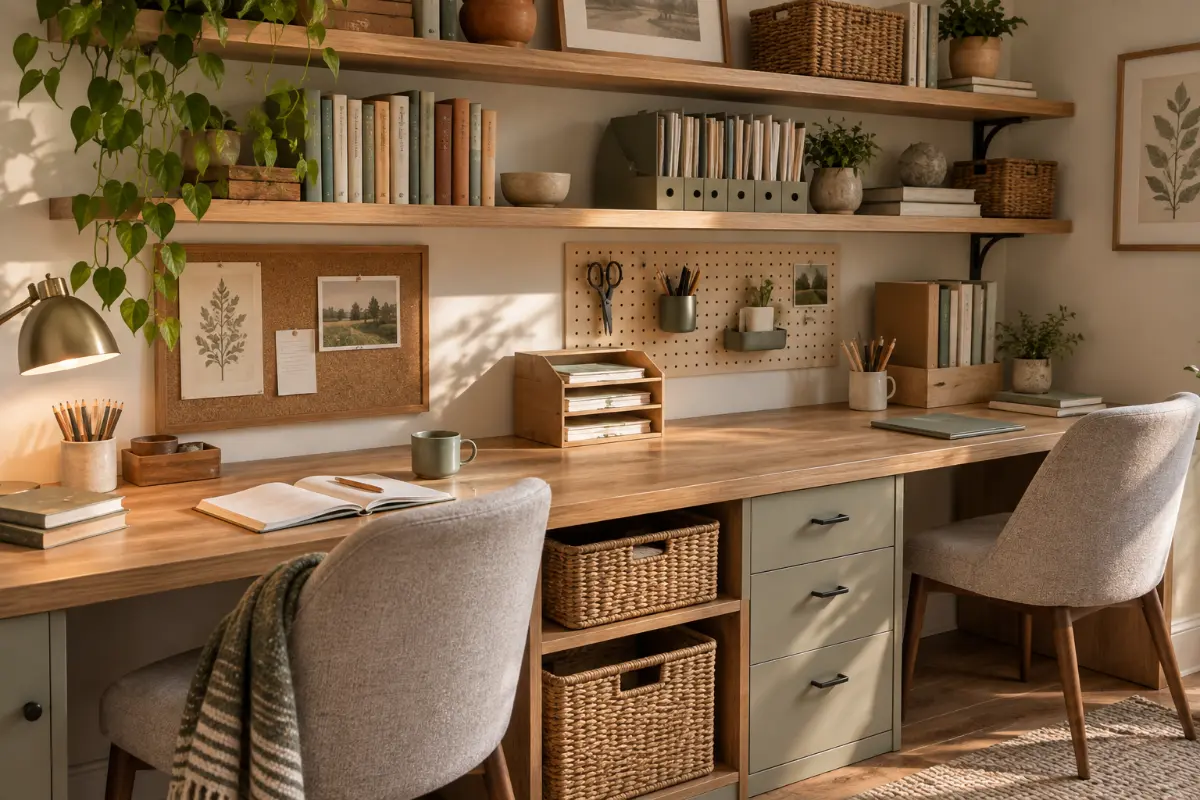
Open shelves are useful for books and everyday supplies, but too much visible storage can make a study area feel busy. Adding drawers, cabinets, or lidded baskets gives you a place to hide the items that do not need to stay on display.
A simple mix of open and closed storage usually works best. Keep the things a child reaches for every day easy to access, then use closed storage for extra paper, craft supplies, backup notebooks, and anything that quickly creates visual clutter.
This balance helps the room feel calmer without making it overly minimal. The goal is to keep the workspace practical while giving the eye a few quieter surfaces to rest on.
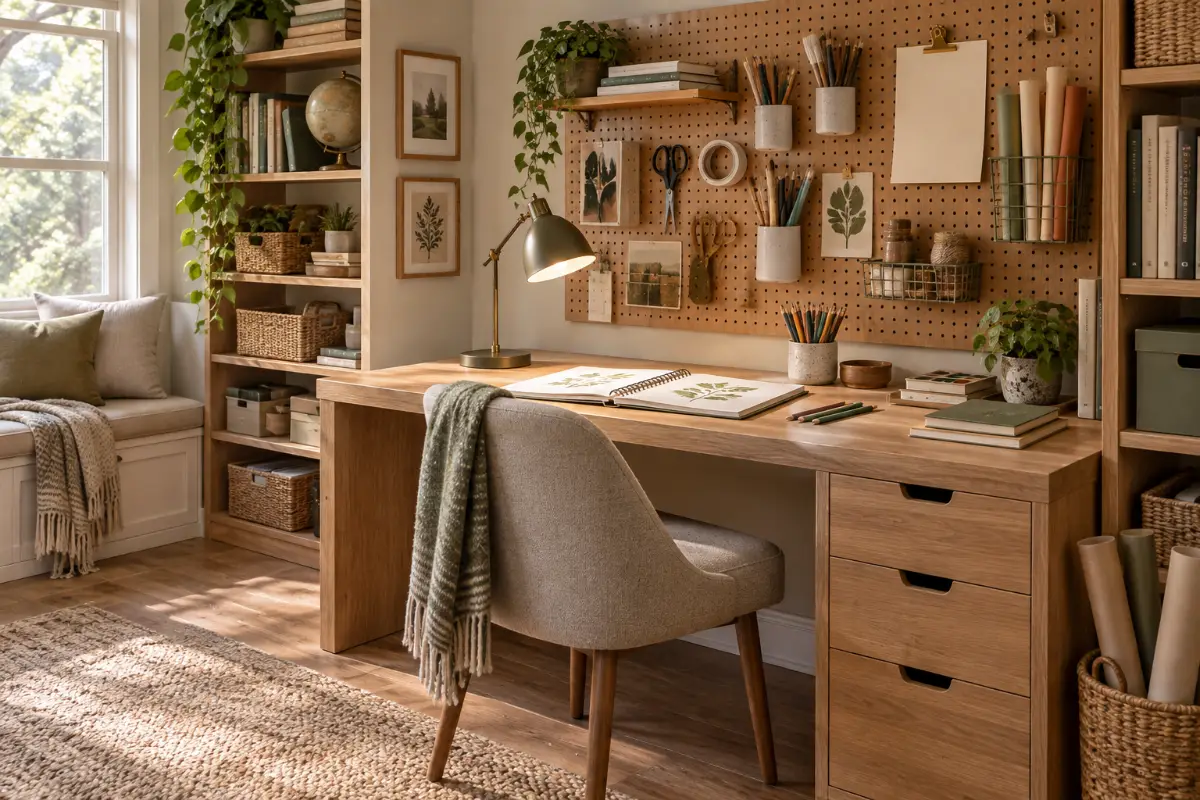
7. Create a Simple Pegboard Supply Zone
A small pegboard can keep everyday supplies close to the desk without taking up much room. Use it for a few practical items such as pencil cups, scissors, paper, small containers, or lightweight shelves.
Keep the arrangement simple so the pegboard supports the study area instead of becoming a wall full of clutter. Leaving open space around the tools makes the setup easier to scan and helps frequently used supplies stand out.
This works especially well for children who switch between homework and creative projects, because the tools stay visible and easy to return to the same place when the work is finished.
8. Make Room for Creative Projects
A homework space can also support drawing, crafts, science projects, and other hands-on activities. If possible, choose a desk with enough clear surface area for larger sheets of paper, art supplies, or a project that needs to stay open for a while.
Store creative materials close to the work area, but keep them grouped in trays, drawers, or wall organizers so they do not take over the desk. A pegboard or shallow shelf can be especially useful for pencils, scissors, rulers, and small containers.
The space should still feel like a study zone rather than a playroom. Using calm colors, practical storage, and only a few visible supplies keeps the area flexible without making it visually noisy.
9. Add a Cozy Reading Corner Beside the Desk
Not every learning activity needs to happen at a desk. A small reading corner gives a child a softer place to read, review notes, or take a short break from sitting upright at the main workstation.
Use one comfortable chair or a supportive floor seat, then add a nearby lamp, a small rug, and a low bookcase or basket for books. Keeping the setup simple makes it feel connected to the study space instead of turning into a separate play area.
Placing the reading corner close to the desk also helps the room support different kinds of learning without requiring extra furniture or a second dedicated room.
10. Keep Books Where Kids Can Reach Them
Books are easier to use when they are stored at a height a child can reach without help. A low bookcase, open shelf, or front-facing display can make everyday reading materials feel more accessible and easier to put away.
Keep frequently used books closest to the reading or homework area, then move less-used materials to higher shelves or closed storage. This reduces visual clutter while still keeping the most important resources within easy reach.
Avoid treating books only as decoration. A mix of vertical books, a few front-facing covers, and one or two baskets usually feels more natural and practical than a perfectly color-coordinated display.
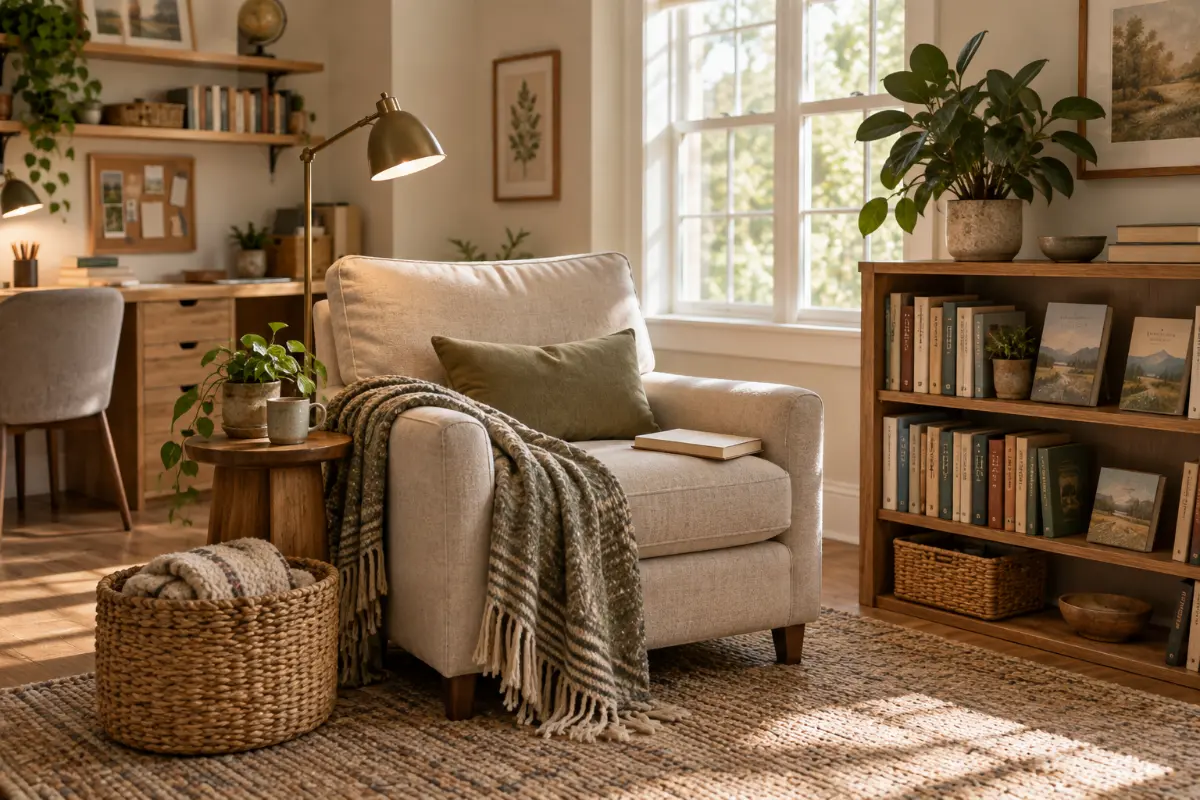
11. Fit a Homework Station Into a Bedroom
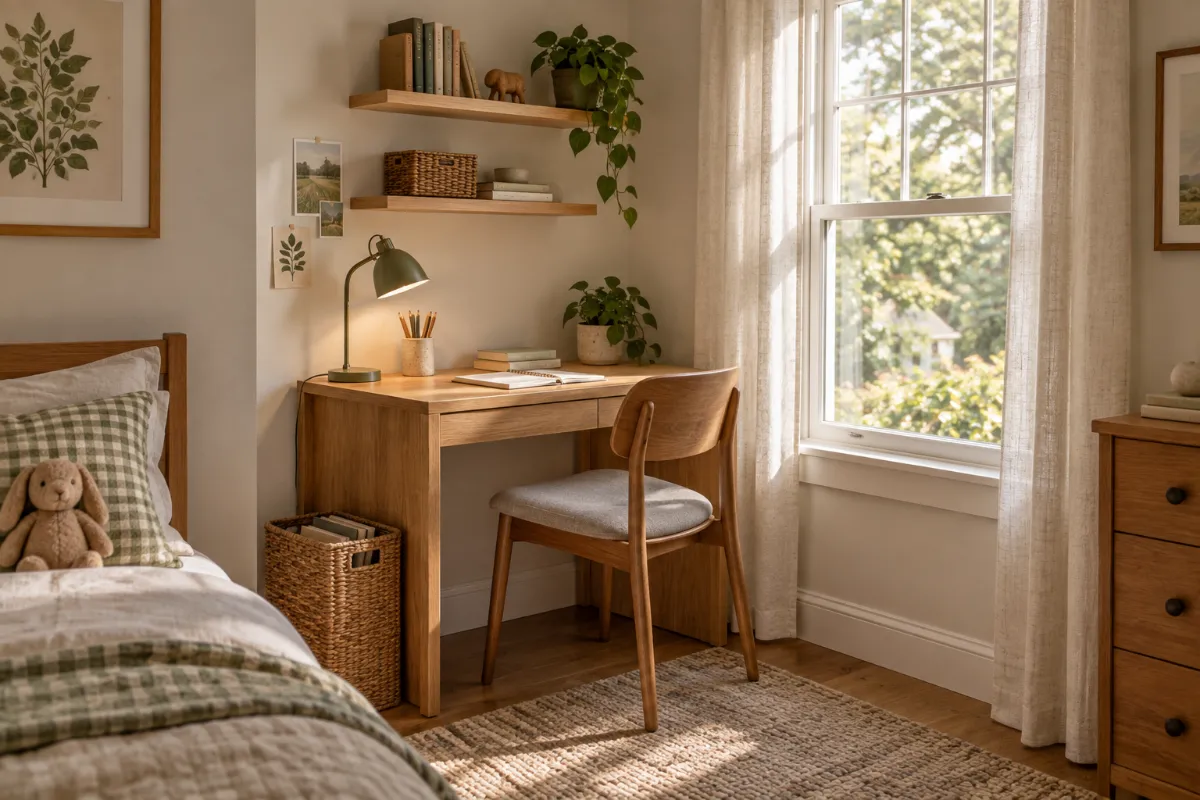
A bedroom can hold a practical homework station without feeling like a classroom. The key is to keep the desk compact, separate it visually from the bed, and avoid filling the surrounding walls with too many school-related items.
Choose a desk that fits the available wall or corner, then add only the storage the child actually needs for everyday work. A small shelf, drawer unit, or wall organizer can keep books and supplies nearby without making the room feel crowded.
Good lighting is especially important in a bedroom setup. Natural daylight works well during the day, while a focused task lamp can make evening homework more comfortable without lighting the entire room too brightly.
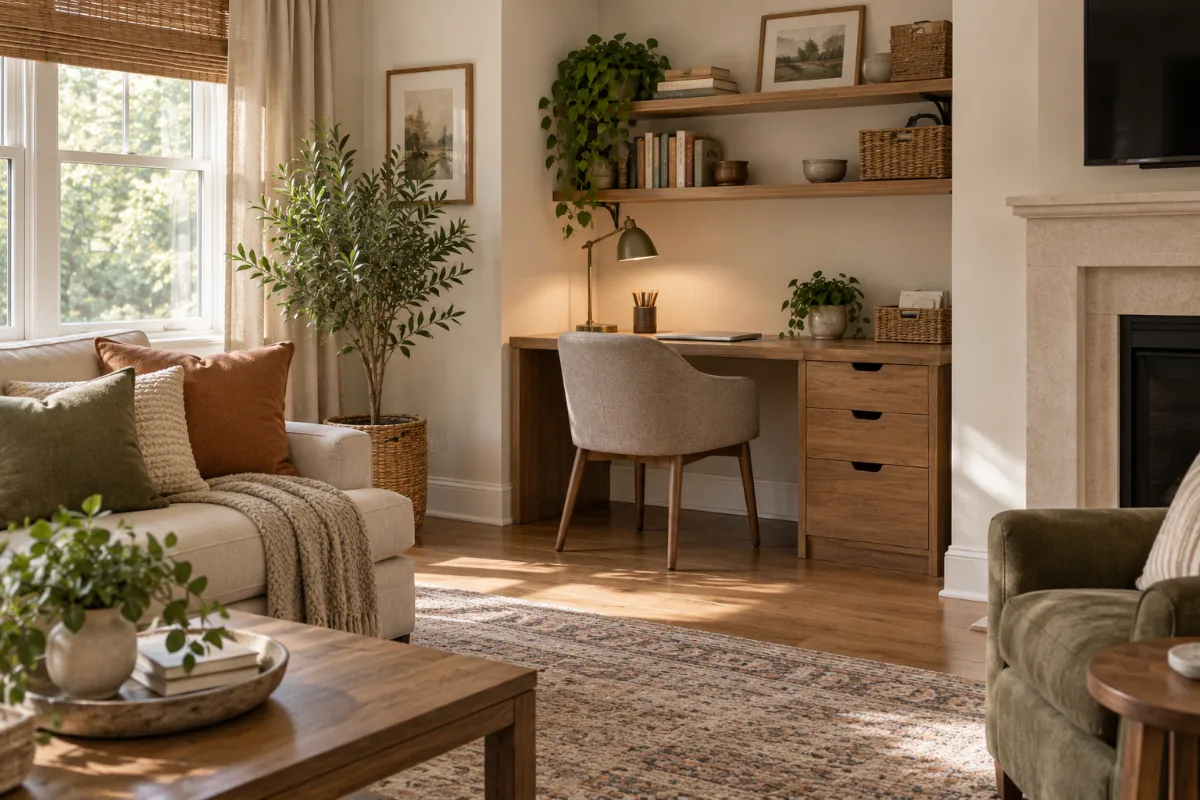
12. Use a Living Room or Family Room Corner
A living room or family room corner can be a good place for homework when a child works better near the rest of the family. It also makes it easier for a parent to answer questions without creating a separate study room.
To keep the homework zone from feeling out of place, choose a desk, chair, and storage that match the materials and colors already used in the room. A simple wood desk, one lamp, and a few discreet shelves can blend into the space more naturally than furniture that looks like it belongs in a classroom.
Keep the setup compact and make sure it does not block the main walking path through the room. When school supplies have a clear place to return to, the corner can function as a study area during homework time and still feel like part of the living space afterward.
13. Try a Fold-Down Desk for a Small Space
A fold-down desk can be a smart option when there is not enough room for a permanent workstation. When the desk is closed, the floor stays more open, and when it is needed, the surface can provide just enough space for homework, reading, or a laptop.
Look for a wall-mounted design with enough depth for a notebook and basic supplies, and add a slim shelf or nearby basket for anything that needs to stay within reach. Keeping storage close prevents the fold-down surface from becoming overloaded.
This type of setup works especially well in small bedrooms, apartments, hallways, or multipurpose rooms where every piece of furniture needs to earn its place.
14. Use a Rolling Cart for Homework Supplies
A rolling cart is useful when homework happens at the kitchen table, dining table, or another shared surface. It keeps books, pencils, paper, and everyday supplies together without requiring a permanent desk.
Use the top level for the items that are needed most often, then store extra paper, notebooks, and creative supplies lower down. Small containers or trays can keep loose items from turning the cart into a cluttered catch-all.
When homework is finished, the cart can roll out of the way and the shared table can return to its normal use. This makes it a practical solution for smaller homes or families that prefer flexible study spaces.
15. Make the Space Easy to Reset at the End of the Day
A homework space is easier to use when everything has a clear place to return to after the work is finished. A simple reset routine can keep the desk ready for the next day without requiring a major cleanup each evening.
Give papers, books, pencils, and backpacks their own storage spots, and keep the desktop mostly clear once homework is done. Drawers, baskets, shelves, and one designated backpack hook or drop zone can make this routine much easier.
The goal is not to make the room look perfect. It is to create a space that can move naturally between active study time and a calmer part of the home when the schoolwork is finished.
How to Choose the Right Homework Setup for Your Home
| Your Space | Best Starting Point |
|---|---|
| Dedicated room | Full homeschool zone |
| Shared kids’ room | Two-child workstation |
| Small bedroom | Compact corner desk |
| Living or family room | Integrated homework nook |
| Very small home | Fold-down desk |
| No permanent desk space | Rolling supply cart |
Common Homeschool Room Mistakes
1. Trying to Recreate a Classroom at Home
A homeschool or homework space does not need to look like a traditional classroom to work well. Too many posters, bright colors, labels, and visible supplies can make the room feel visually busy rather than calm and focused.
Start with the pieces the child actually needs: a comfortable work surface, good lighting, practical storage, and easy access to books and supplies. Decorative elements can be added afterward, but they should support the room instead of overwhelming it.
A space that still feels like part of the home is often easier to live with long term, especially when the study area shares a bedroom, living room, or family room.
2. Choosing Style Before Function
A beautiful desk setup is not very useful if the chair is uncomfortable, the surface is too small, or there is nowhere to store everyday supplies. Function should come first, especially in a space that may be used for homework several days a week.
Before choosing decor, check that the desk has enough working room, the chair fits the child comfortably, and the lighting is appropriate for reading and writing. Storage should also be close enough that frequently used items can be reached without interrupting the work.
Once those practical pieces are in place, color, texture, and styling can make the space feel warmer and more connected to the rest of the home.
3. Storing Everyday Supplies Too Far Away
A study space becomes less efficient when a child has to leave the desk repeatedly to find paper, pencils, books, or other basic supplies. Everyday items should be stored close enough to reach quickly and return easily.
Use a nearby drawer, shelf, basket, pegboard, or rolling cart for the things that are used most often. Less frequently needed materials can be stored farther away or higher up, which keeps the main work zone from becoming overcrowded.
This simple arrangement also makes the end-of-day reset easier because every frequently used item already has a clear home near the study area.
4. Designing the Space Without Considering How the Child Studies
Not every child works best in the same environment. Some need a quiet corner with very few distractions, while others focus better in a family room where a parent is nearby.
Think about how the child actually uses the space before deciding on the layout. A traditional desk may work well for writing and computer tasks, while a nearby reading chair, larger project surface, or shared table may be more useful for other activities.
The best homework setup is the one that supports the child’s real routine rather than forcing every type of learning into the same fixed arrangement.
Frequently Asked Questions
The Bottom Line
A good homeschool or homework space does not need to be large, expensive, or designed like a classroom. What matters most is creating a clear place to work, keeping everyday supplies within reach, and choosing a layout that fits the child’s real routine.
Whether you use a full room, a bedroom corner, a shared desk, or a small family-room nook, a few thoughtful choices can make the space feel calmer, easier to use, and more comfortable for everyday learning.